


What Can I Do to Help Prevent Skin Cancer?
Posted on August 7, 2014

Happy Thursday! One day closer to the weekend and outdoor summer activities! We’ve talked all week about the scary part of skin cancer. Now, let’s talk about the simple things you can do to help prevent it.
What do you do to protect yourself?
 Remember, protection from ultraviolet (UV) radiation is important all year round, not just during the summer or at the beach. UV rays from the sun can reach you on cloudy and hazy days, as well as bright and sunny days. UV rays also reflect off of surfaces like water, cement, sand, and snow. Indoor tanning (using a tanning bed, booth, or sunlamp to get tan) exposes users to UV radiation.
The hours between 10 a.m. and 4 p.m. Daylight Saving Time (9 a.m. to 3 p.m. standard time) are the most hazardous for UV exposure outdoors in the continental United States. UV rays from sunlight are the greatest during the late spring and early summer in New England.
CDC recommends easy options for protection from UV radiation:
- Stay in the shade, especially during midday hours
- Wear clothing that covers your arms and legs
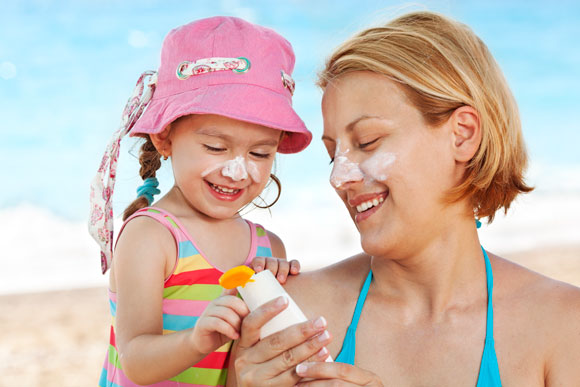
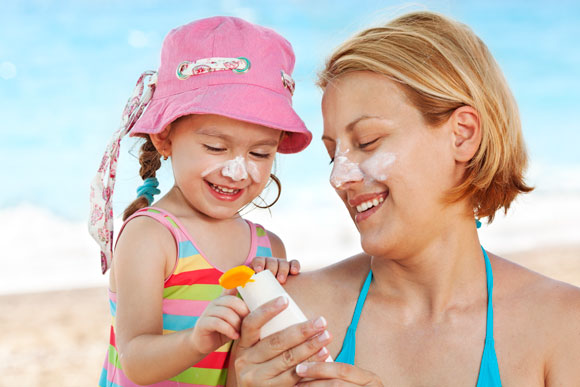
- Wear a hat with a wide brim to shade your face, head, ears, and neck
- Wear sunglasses that wrap around and block both UVA and UVB rays
- Use sunscreen with sun protective factor (SPF) 30 or higher, and both UVA and UVB protection
- No indoor tanning
Doesn’t sound like a lot of work to prevent skin cancer, does it? So, I still hear people tell me that indoor tanning is safer. Hmmm… I’ll talk about that topic tomorrow.
Disclaimer:
The opinions on this site expressed by the author, in any linked materials and in the Comments Section are for informational purposes only and are not to be construed or used as medical advice and/or substituted for a doctor-patient relationship.
Using, accessing, browsing and/or commenting on this site and/or providing personal or medical information on this site do not constitute a physician-patient relationship. Please do not ask for medical advice in the comments or via e-mail. If the reader or any other person has a medical concern, please consult with a licensed physician or other trained health care professional in your state. Please do not act upon any information shared on this blog without first consulting your physician.
Never disregard medical advice or delay seeking medical care because of something you have read on or accessed through this site.
The inclusion of any link does not imply endorsement of the linked site or its affiliates or any information, content, products, services, advertising or other materials presented on or through linked website. This site is not responsible for the availability, accuracy, or any information, content, products or services accessible from such sites.
Comments:
This site is open to the public. You are responsible for what you post, so please be thoughtful prior to commenting and refrain from sharing information that you would like to keep private. Health care professionals should refrain from sharing specific details about cases that could potentially violate HIPAA. Please also refrain from posting content that is obscene, defamatory, threatening, fraudulent, invasive of another persons privacy rights, or is otherwise unlawful.
Comments or content that violate the above may be removed at our sole discretion.


Comments are currently closed.